
In retirement, Steve Gillman found his purpose: to serve others
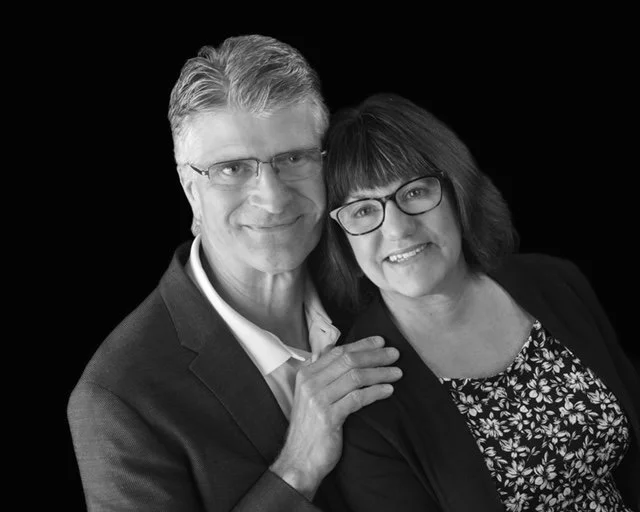
Many people pick up golf in retirement.
Not Steve Gillman. Retirement is when he quit golf.
He wanted to devote more time to volunteering.
After 35 years with Eli Lilly and Company, Steve retired in 2013 as the Vice President of Health, Safety and Environment. Since, he has devoted himself to giving back, advocating and mentoring young people throughout the community.
Ever an engineer, he looks at the problem first: What are the systemic issues we’re trying to solve, and what are the best ways to tackle them?
A United Way of Central Indiana Tocqueville donor along with his wife, Cindy, Steve volunteers with St. Vincent de Paul-Indianapolis, Thriving Families and several nonprofits accredited with United Way, including Starfish Initiative and Brightlane Learning.
He also advocates with organizations including Bread for the World, writing and calling elected officials to ensure they’re educated on topics including food insecurity, the benefits cliff and the ALICE population – and to generate support for programs like SNAP, WIC and free and reduced lunches.
Mentorship is the cornerstone of his service. By Steve’s estimate, he mentored over 20 young engineers during his time at Lilly. In retirement, he’s now mentoring at least eight people, from youth to adults in their 40s.
Steve met some of his mentees through his volunteer work with the Starfish Initiative and Thriving Families – and others he’s connected with outside of that work.
For Steve, mentorship doesn’t have an end date. He stays with his mentees for life. He met one mentee, Angel, as a high school senior and remains with him today more than 12 years later.
He guided Angel as he became the first person in his family to graduate from high school, helped him apply for financial aid to attend Ivy Tech and tutored him through his skilled certificate program. One mentee often leads to others, and he now mentors one of Angel’s friends, too.
United Way recently spoke with Steve about his connection to United Way and his commitment to volunteerism.
(This conversation has been edited for length and clarity.)
How did you first get involved with United Way? What about the organization spoke to you?
I first got involved by giving financially when I joined Lilly in 1979 as it was strongly encouraged. It wasn’t until I retired that I personally got involved with my time and talents.
I like the idea that United Way provides broad community support in an efficient manner, focusing on basic needs in the community. United Way thinks broadly – what are the systemic community issues? – and they ensure that the community is approaching those issues in a collective way. It’s a single place to give and help out proudly.
United Way has a way of certifying nonprofits [through the accreditation process] and helping them be better.
I’ve participated in many United Way events and activities, including the retiree network [Retire United] events, sharing volunteer experiences with others and teaming up on common issues.
Are there philanthropic causes within United Way's work that you’re particularly passionate about?
Basic needs, particularly food insecurity – helping ALICE families and those experiencing homelessness.
Other important causes: immigration through my church, St. Monica, and livable wages, through efforts at EmployIndy and others.
I’m involved in advocating through Bread for the World, which advocates on a national level so those who are food insecure have the support systems they need, like SNAP, WIC, Child Tax Credit, free-and-reduced lunches, while they’re striving to be self-sufficient.
I tutor through Thriving Families and Brightlane and do a lot of one-on-one mentoring through Starfish Initiative and outside of any specific organization.
Looking back on my life, I was quite fortunate. I grew up in Brookville, Indiana. I was one of 10 kids, seventh in line. Neither of my parents attended college, but they expected all 10 of us to do so. They believed education was important.
Tell us more about the mentoring you do.
Mentoring is important to me. It is about giving back and helping others.
As I retired, I reflected on all the mentoring I had throughout my life from high school through my career at Lilly. Though it often wasn’t a formal relationship, folks took time to spend time with me and give thoughtful advice and help as I made important career and life decisions.
Through Thriving Families, we work with families in Washington Township to get them above the benefits cliff. Not only mentoring families but bringing them into our circle of influence.
I am with my third Starfish mentee, a freshman at North Central High School, and still mentor my first two mentees: Javier, 22, who is in the electrician apprentice program, and Luca, 19, who is applying to the electrician apprentice program while working in auto sports.
I tell these stories so I can help change people’s paradigm about programs like WIC and SNAP. These are folks who have had a tough life. I’ve learned so much about how hard it is for these families.
And for these kids, showing up is important.
When Angel was in high school, I was working with him one day on his FAFSA (Free Application for Federal Student Aid) paperwork and the computer went down. I had to leave but told him I would be back.
When I returned, he was in the library and said, “I didn’t think you’d come back.”
But I did.
It’s about showing up. They know I’m going to be there.
It’s definitely a learning and a giving experience.
What advice do you have for others who want to get involved in volunteerism and giving back to the community? How can people get started?
Find the issue that you are passionate about and then find the organizations that focus on that area. Get involved with your time at the front-line level and organizational level and your money.
Realize that it will not be easy or always comfortable but jump in.
The personal learning will be life changing: learning that there are large parts of our community working hard to improve their lives, but there are many things that are hard to overcome, like lack of generational wealth, clearing the benefit cliff, and costs – such as housing, food, transportation – increasing faster than wages. Biases based on race and gender hinder folks from improving their life situation.
Why is volunteerism and giving back to the community important to you?
That is why we are here. To help others. To those who have much, much is expected.
I like a quote from Mark Twain: “The two most important days in your life are the day you are born and the day you find out why.”
I think as I aged and learned, I found out my why: to help others through my experiences and success.